

//Conversion
Conversion rate optimization: more customers from the traffic you have.
More traffic does not fix a page that gives people no reason to act. We find the friction between the visit and the next step, then fix the message, offer, proof, page or form in the order most likely to matter. Work directly with our founders. No account-manager handoff.
We start with a small set of places: the message, the offer, the proof, the next step, the traffic source and the measurement underneath them. Conversion rate optimization is the discipline of finding those leaks in order of cost and fixing them, then testing honestly where the traffic justifies it. The work is clarity, not trickery. We do not use dark patterns, because the businesses that win on conversion win by being easy to understand and trust.
We run CRO for businesses in Orange County and across the US, usually alongside the ads or the SEO that bring the traffic, because improving the page can improve the economics of the channels sending qualified traffic to it. We check the tracking before optimizing the page. A broken conversion event can make a working page look broken, and a duplicate event can make a weak one look healthier than it is.
//Before we call it CRO
First prove there is something to optimize.
We check whether the site has qualified traffic, a measurable action and working tracking. If the real problem is acquisition, the offer or broken measurement, we deal with that before proposing a testing program.
//Where we would look first
We look for the first place the decision breaks.
The message is unclear.
A visitor cannot act on an offer they have to work out. If it takes reading to understand what you do and who it is for, that is the first thing we would test.
The offer is weak.
The page may be perfectly clear about something nobody particularly wants. Clarity cannot rescue an offer that gives no reason to act now.
Proof arrives after the visitor needed it.
Reviews, results and credentials often sit below the point where the decision was already made. We would move the evidence to where the doubt happens.
The next step asks too much.
A long form, a demanding process, or several competing actions. Each one is a reason to leave and come back never.
See how we design the pageThe ad and landing page disagree.
The visitor clicked one promise and landed somewhere that makes them start over. We would compare the source with the page before redesigning anything.
See how we build landing pagesThere is not enough traffic to know.
Sometimes this is not a conversion problem yet. If the page has too few qualified visitors to show a pattern, we would inspect acquisition before selling a CRO project.
//What you get
What conversion messaging and optimization include.
Conversion audit
Where visitors arrive, where they leave, what the page promises versus what brought them, and what the analytics are actually counting. In writing, in priority order.
Tracking that counts customers
Calls, forms, bookings and purchases measured correctly before anything is changed, because a test judged on a broken metric proves nothing.
Messaging and copy
Who you are for, what you do better than the alternative, and why someone should pick you, said in plain words a buyer recognizes.
Friction removal
Fewer fields, one clear call to action, faster load on a phone, and trust signals where the doubt happens. We remove fields, choices, delays and distractions that do not earn their place.
Proof placement
Reviews, results and specifics moved to the moment the visitor is deciding, instead of buried three scrolls down.
Honest testing
Real tests where the traffic supports them, one change at a time, judged on enough data to mean something.
//When this service earns its place
These are signals we look for. They are not your diagnosis.
//Receipts
Read related case studies
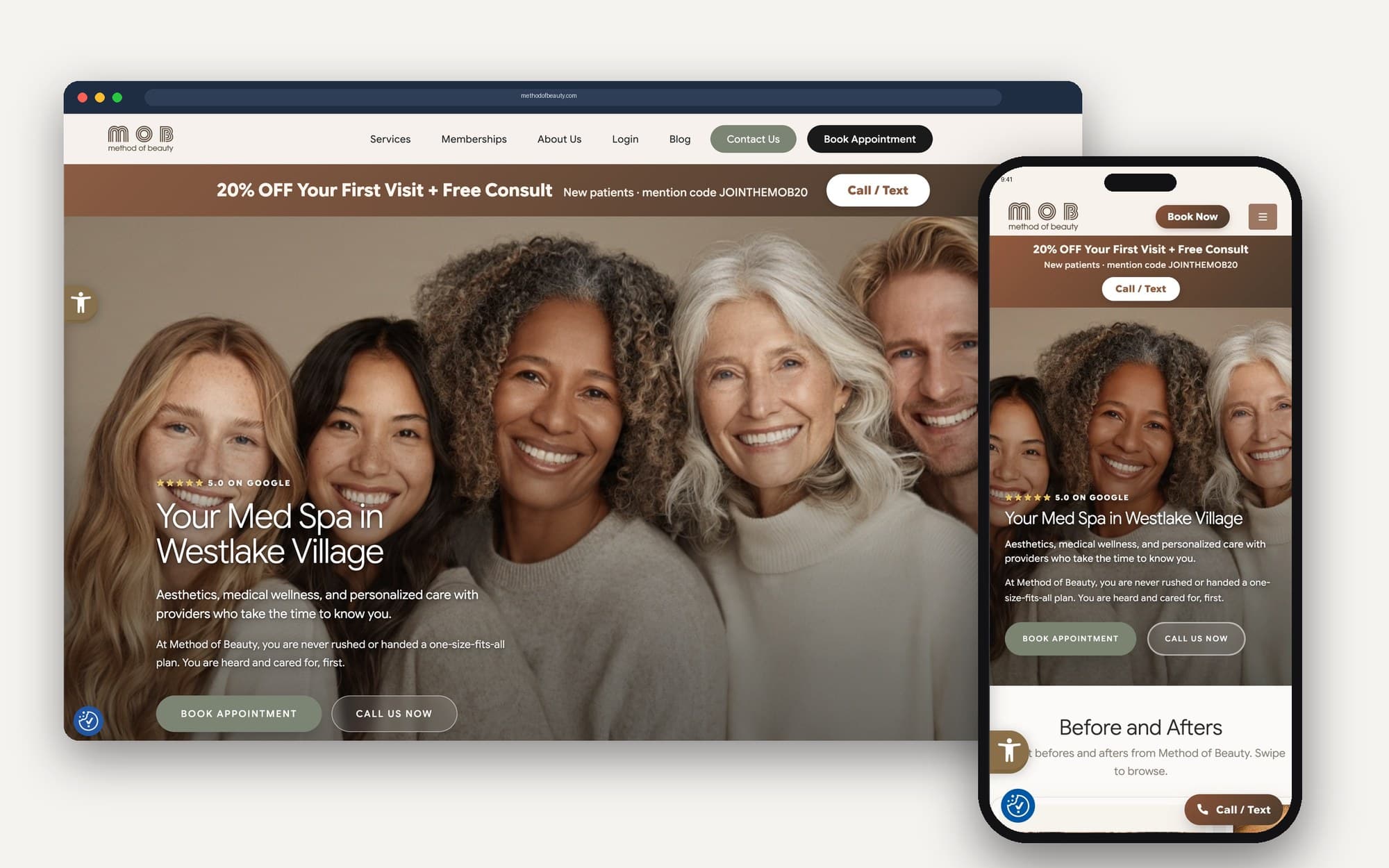
Method of Beauty
Ads built on what people actually search for
Deep keyword research first, then landing pages built for those searches and campaigns with the messaging built around them, for a med spa that sat on page two for most of what it sells. Meta clicks cost 60% less than the average advertiser pays.
Read the case study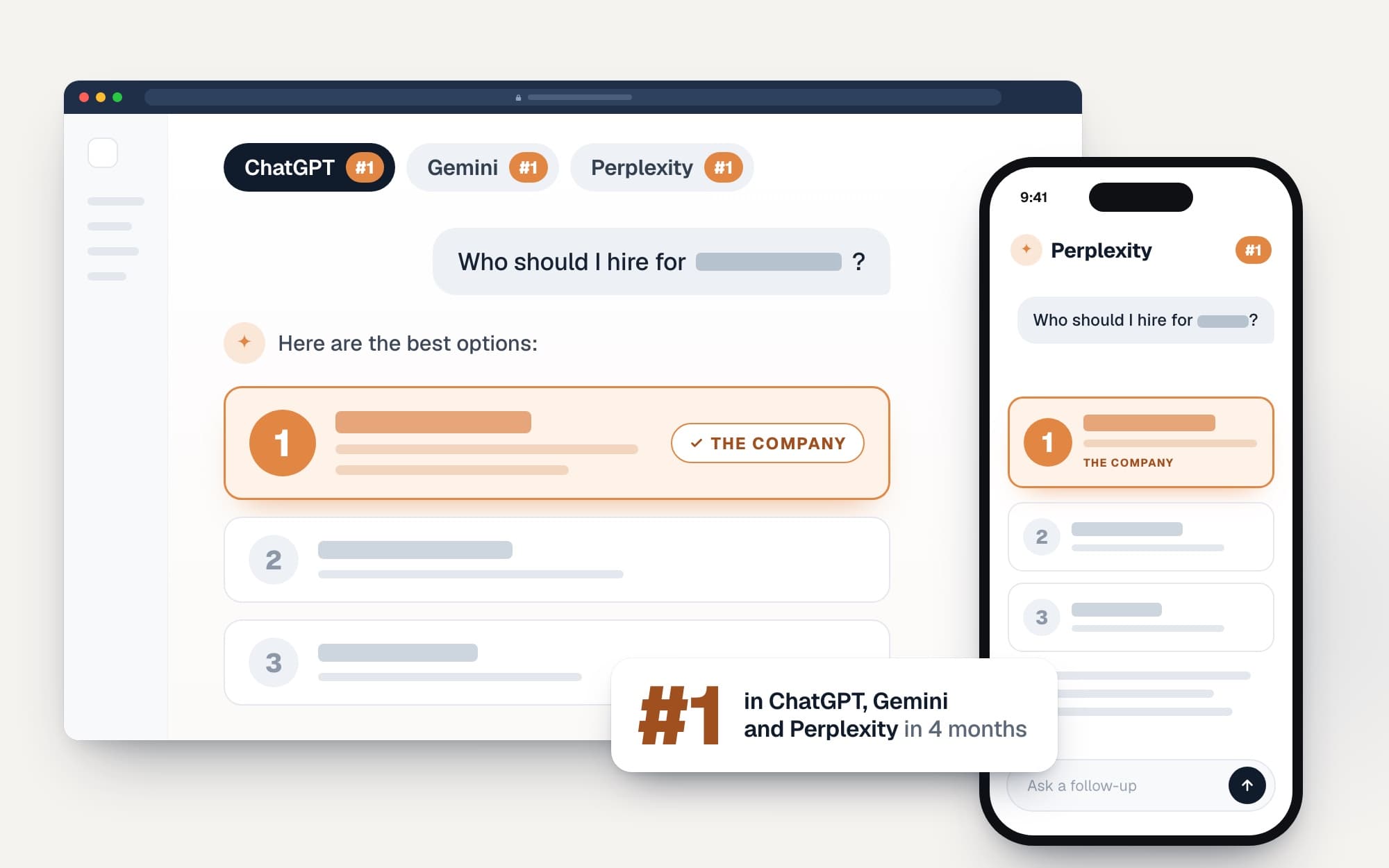
Technology company
An inbound engine that did not depend on ad spend
Forms, lead routing, lead scoring and attribution in one CRM, with every lead posted to the team in real time. More than a third of inbound leads came from organic search, and enterprise interest arrived within weeks of launch.
Read the case study//Two-minute quiz
Where is the conversion breaking?
Four questions about your situation. At the end, send them to our founders and get a straight answer back.
Question 1 of 4
Are you getting enough traffic to see a pattern?
//How we work
Clarity, then friction, then proof.
- 01
Sharpen the message
We get clear on who you are for, what you do better than the alternative, and why someone should pick you, then say it in plain words a buyer recognizes.
- 02
Match the page to the promise
The headline echoes the ad, the next step is obvious, and the proof shows up before the visitor has to scroll for a mile. One page, one job.
- 03
Remove the friction
Fewer fields, a single clear call to action, faster load, visible trust signals. We remove the fields, choices and delays that make the next step harder than it needs to be.
- 04
Test honestly
Where it is worth it, we run real tests, judged on enough data to mean something, changing one thing at a time so we actually learn what moved the number.
No cost. No obligation. Starts with a short conversation with our founders.
//The case for us
How we test without pretending.
Persuasion without the sleaze.
No dark patterns
No fake countdowns, no manipulative tricks. They erode trust and savvy buyers notice. We win conversions through clarity and genuine proof.
Evidence over opinion
Where the traffic justifies it, we let real tests decide instead of arguing about button colors. Most test ideas fail, and that is data, not waste.
Honest ceilings
No page converts everyone, and we will not promise a specific lift before doing the work. We promise to find and fix the friction that is costing you customers now.
//What you can count on
How we operate.
//Common questions
Things we get asked first.
What is conversion rate?
Google Ads defines conversion rate as the number of conversions divided by the eligible ad interactions that can be tracked to those conversions.
Google Ads Help, Conversion rateWhat counts as a conversion?
A conversion is an action defined as valuable to the business, such as a purchase, call, sign-up or other measured action.
Google Ads Help, About conversion trackingWhat is conversion tracking?
Conversion tracking measures how ad interactions lead to valuable actions such as sales, leads or calls. The actions have to be configured before they can be used reliably in reporting.
Google Ads Help, About conversion trackingIs there one traffic number required for A/B testing?
No single traffic threshold works for every test. Required sample size depends on the starting conversion rate, the size of the change you need to detect and the confidence required. If meaningful data would take months to collect, a formal test may not be the useful next step.
What are Core Web Vitals?
Google's Core Web Vitals measure loading performance, responsiveness and visual stability using LCP, INP and CLS.
Google Search Central, Core Web VitalsDo AI shopping agents change conversion work?
They add a new kind of visitor. Meta says its Muse agent can take action on a product or a list for a person, with shopping connectors that include Walmart, Best Buy, Sephora and Wayfair. Our read: when software finishes the purchase or booking, the same basics decide it. A form that submits, prices and hours written as text, and one clear next step.
Meta Newsroom, The Biggest News From Connect 2026//Not sure this is the right service?
Good. The diagnosis is our job.
Talk to our founders. We will look at the business and tell you what we think should happen first.
//Read more
Want to check our thinking first?
//Related services
The work this connects to.
//Definitions
What the initials actually mean.
Defined in a sentence, with a link to the organization that owns the term.
Getting more customers out of the visitors you already have, by fixing the message and removing friction. A conversion is simply the action you want: a call, a form, a booking, a purchase.
Source: Google Ads Help: conversions