

//SEO
AI search optimization built on real SEO, not GEO tricks.
Google is explicit: AI Overviews and AI Mode use its core Search ranking and quality systems. There is no special Google AI schema, llms.txt file or magic content format that earns a citation. We make the site accessible, useful, original and easy for search systems to understand, then measure where the brand appears across Google and other AI search products.
AEO and GEO are useful names for work aimed at visibility in answer engines and generative search. Google now addresses both terms in its own guidance, but makes an important point: for Google Search, that work is still SEO. Its generative features use the Search index and core ranking systems, including retrieval-augmented generation and query fan-out, to find supporting pages.
Other systems have their own access rules. OpenAI says public sites can appear in ChatGPT Search and recommends allowing OAI-SearchBot so content can be discovered and cited. Placement is not guaranteed. The job is not a collection of secret AI files. It is sound SEO, crawler access, original expertise, legitimate evidence and measurement across the search products your buyers use.
//AI search is part of search
Your search strategy now has to account for answers as well as results.
The question is not SEO versus AEO versus GEO. Google itself says optimizing for its generative Search experiences is still SEO. The useful questions are which search products matter to your buyers, whether those systems can access and understand your site, and whether the web gives them enough useful evidence to surface you.
//What you get
What AI search optimization includes.
Search and crawler access
Googlebot, OAI-SearchBot and other relevant search crawlers need access to the pages you want discovered. We check robots rules, indexing, hosting and other access problems before inventing a content problem.
AI visibility baseline
We establish where the brand and key pages appear today using first-party platform data where it exists, analytics and a defined prompt set. Third-party visibility scores are indicators, not an AI platform's internal ranking data.
Original, expert-led content
Google recommends useful, non-commodity content with original information and first-hand expertise. We strengthen the source material instead of rewriting good pages into an imaginary AI format.
Clear business information
Important facts about the company, people, products, services and locations should be consistent and easy to understand across the site and relevant platform profiles. Structured data should accurately reflect what the page actually says.
Legitimate third-party evidence
Relevant reviews, coverage, links and references can strengthen the evidence around a business. We pursue legitimate evidence, not manufactured mentions.
Measurement without pretending
We use Search Console, analytics, referral data and controlled prompt tracking according to what each platform exposes. We separate first-party reporting from estimates made by outside tools.
//Search foundation
The search work AI visibility still depends on.
Google says its generative Search features use the Search index and core ranking systems. These are search results we can document.
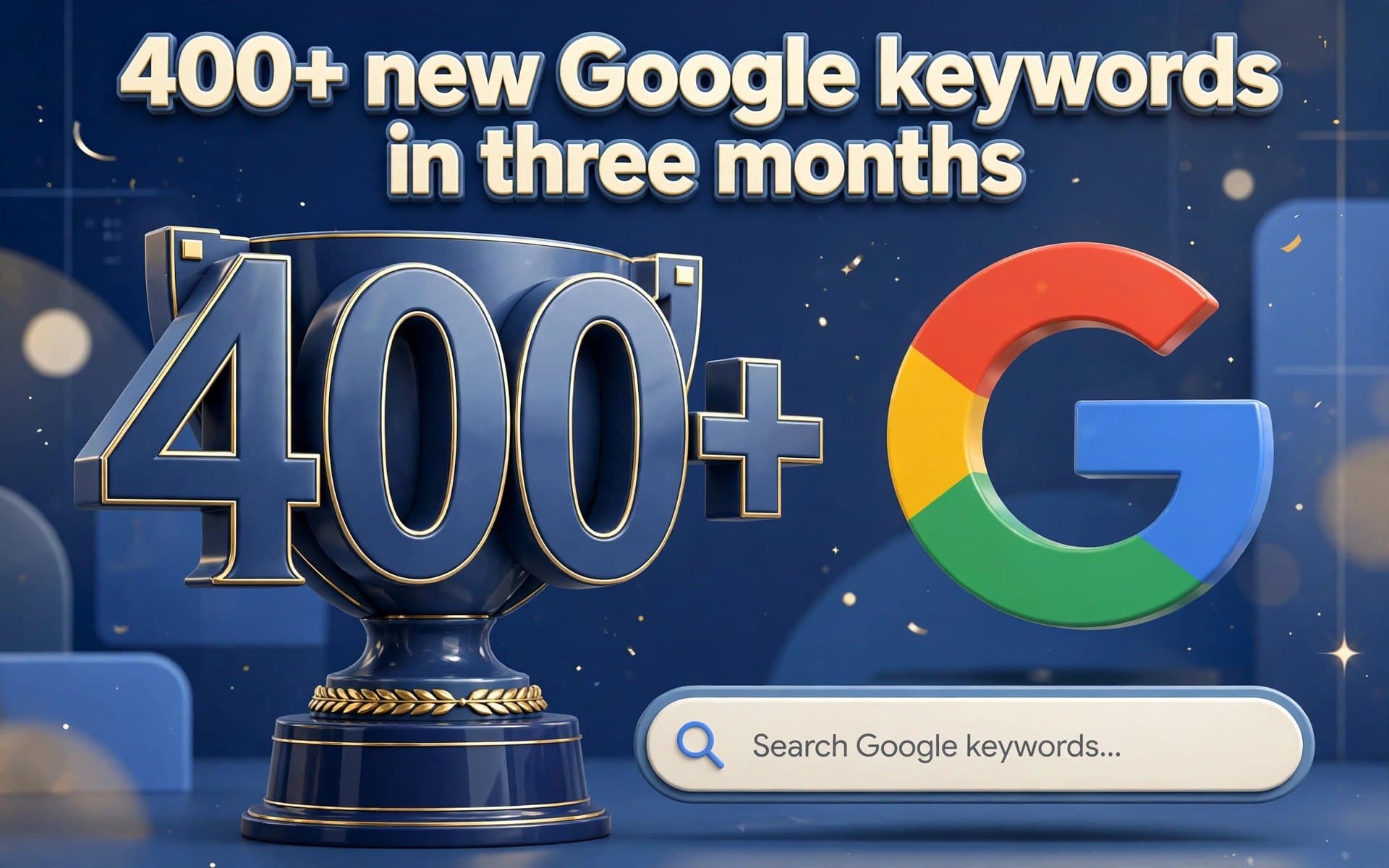
Medical practice
400+ newly ranking keywords in three months
A medical practice with page one for its name and page two for most of what it sells. Search impressions rose more than 40%, and nearly 140 non-brand terms landed in Google's top three, including the near-me searches that bring people through the door.
Read the case study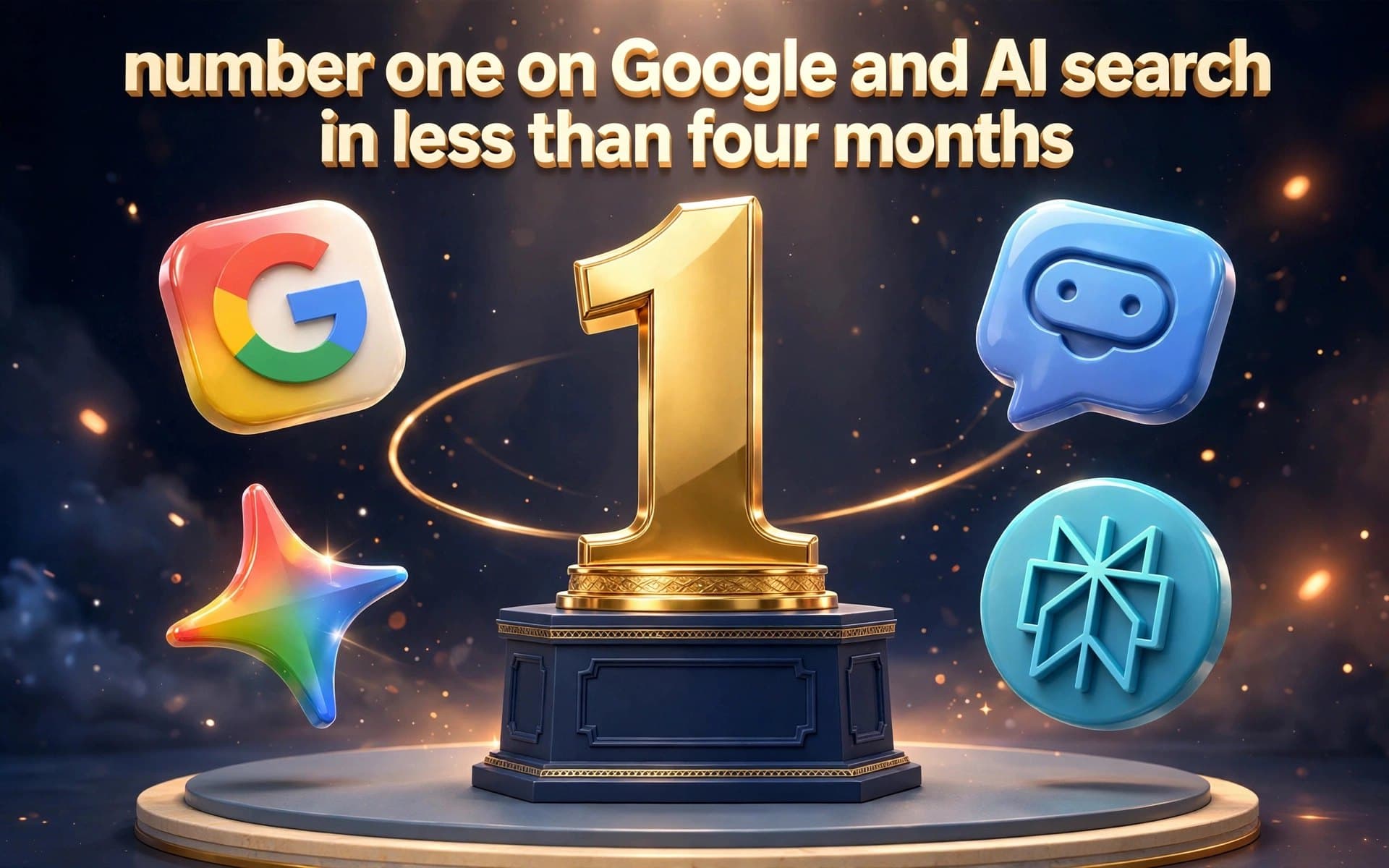
Technology company
Named first by ChatGPT, Gemini and Perplexity
A technology company with no website went from missing in most AI answers to the first company named for what it sells, in four months. Its facts were corrected where AI models read them, and the site was written to be quoted.
Read the case study//Two-minute quiz
How ready is your site for AI search?
Four questions give our founders useful context about access, source quality, current visibility and measurement. They do not generate an automatic prescription.
Question 1 of 4
Can search crawlers reach the pages you want found?
//How we work
How we improve AI search visibility.
- 01
Make the site eligible
We confirm important pages can be crawled, indexed and surfaced by the search systems that matter.
- 02
Improve the source material
We strengthen original expertise, factual support, authorship, useful answers and information a buyer would actually want. We do not rewrite pages into a made-up AI format.
- 03
Strengthen the evidence around the business
Relevant third-party references, reviews, links, profiles and consistent business information help establish what is true beyond your own sales copy.
- 04
Measure what appears
We use first-party platform reporting where it exists, analytics where referrals can be measured and controlled prompt tracking where the platform does not expose a ranking report.
Starts with a short conversation with our founders.
//What you can count on
Platform guidance first. GEO folklore second.
Google says AEO and GEO for its generative Search features are still SEO. It does not require special AI markup, llms.txt or artificial content chunking.
OpenAI
OpenAI says public websites can appear in ChatGPT Search and recommends allowing OAI-SearchBot so content can be discovered. Placement is not guaranteed.
Measurement
We separate platform reporting from third-party estimates. If a platform does not expose an internal ranking report, we do not pretend that it does.
//What you can count on
How we operate.
//Common questions
What the platforms actually say about AI search.
What do AEO and GEO mean?
AEO means answer engine optimization. GEO means generative engine optimization. Google uses both terms for work focused on AI-search visibility, but says that from Google Search's perspective the work is still SEO.
Google Search CentralDoes Google require special schema or an llms.txt file for AI search?
No. Google says no special AI markup or machine-readable file is required for its generative Search features. It also says llms.txt does not help or hurt Google Search visibility.
Google Search CentralDoes content need to be broken into special "AI-friendly" chunks?
No. Google says there is no requirement to break content into tiny pieces for generative Search and recommends writing pages for people rather than for an imagined AI format.
Google Search CentralWhat kind of content does Google recommend for generative Search?
Google recommends original, useful, non-commodity content with genuine first-hand expertise and a clear point of view rather than material that simply restates what already exists online.
Google Search CentralHow can a site become eligible for ChatGPT Search?
OpenAI says any public website can appear in ChatGPT Search. Allowing OAI-SearchBot helps content be discovered, surfaced and cited, but placement is not guaranteed.
OpenAI Help Center//Not sure this is the right service?
Search now includes answers. Your site should be ready for both.
Show us the site and where buyers search for information today. We will look at access, source quality, visibility and measurement, then tell you what deserves attention first.
//Related services
The work this connects to.
Technical, on-page and content SEO that turns into calls, forms and booked revenue.
Map Pack, near-me searches and location pages for businesses that serve an area.
Google Business Profile optimization and management for local visibility and customer decisions.