

//For Restaurants & Hospitality
Full tables.
Real regulars.
Restaurants do not all have the same marketing problem. A full Saturday and an empty Tuesday are not the same as weak discovery, weak repeat business or a broken booking path. We start with the business, not a restaurant-marketing checklist.
//Who this is for
Best fit for an operating restaurant or hospitality business with real sales, room to grow somewhere, and budget set aside to act on the plan. If the concept is still being formed, we are probably early.
//WHAT THE DATA SAYS
Where marketing usually breaks.
Restaurant economics leave little room for lazy assumptions. These are industry facts, not a diagnosis of your restaurant.
Margins leave little room for sloppy spend.
Harvard Business School reported in 2020 that average restaurant operating profit was about 4 to 5%, while labor and cost of goods each ran around 30% of revenue. More demand is not useful if the economics underneath it are weak.
Harvard Business School Working KnowledgeReviews can change demand.
In Michael Luca's Harvard Business School study of independent restaurants in Washington, a one-star Yelp increase produced a 5%-9% revenue effect. That is a study result, not a forecast for every restaurant.
Harvard Business SchoolA seat has a clock on it.
Cornell restaurant-revenue research uses RevPASH, revenue per available seat-hour, because restaurant capacity is perishable. An empty seat in a specific hour cannot be stored and sold tomorrow.
Cornell Hospitality research//A food business we actually owned
The budget has come out of our account too.
Body Juice was one of Jessica and Ben's own businesses in Costa Mesa. They took it from seven farmers' markets to a storefront and grew the customer base 600%. It was a juice business, not a full-service restaurant. We show it here because the marketing spend, payroll and margin were their problem too. The second study is a technology company that went from no website to the first name ChatGPT, Gemini and Perplexity gave, in four months.
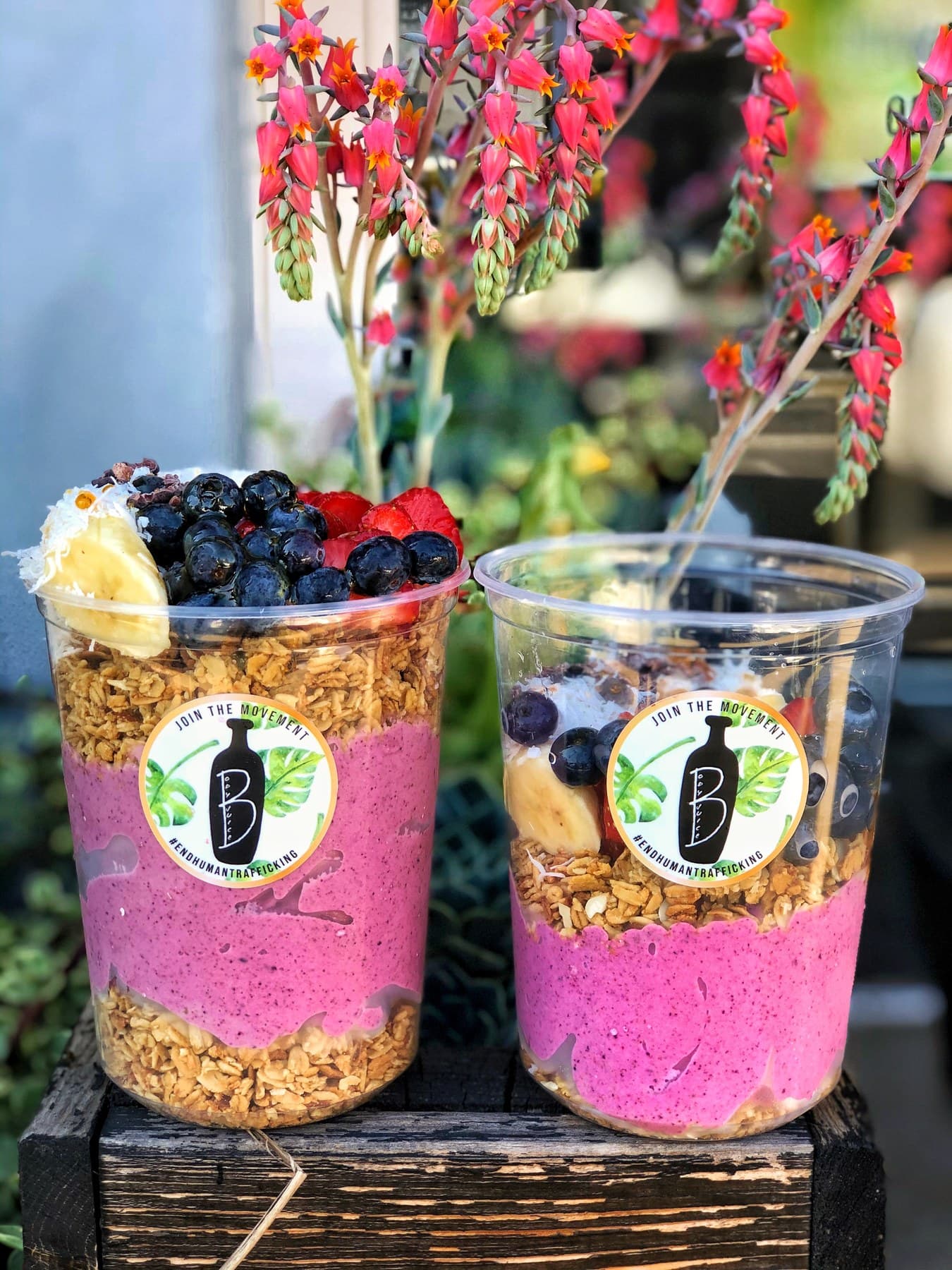
Body Juice
From farmers' market cart to 600% customer growth
One of our founders' own businesses, built on a founder's budget.
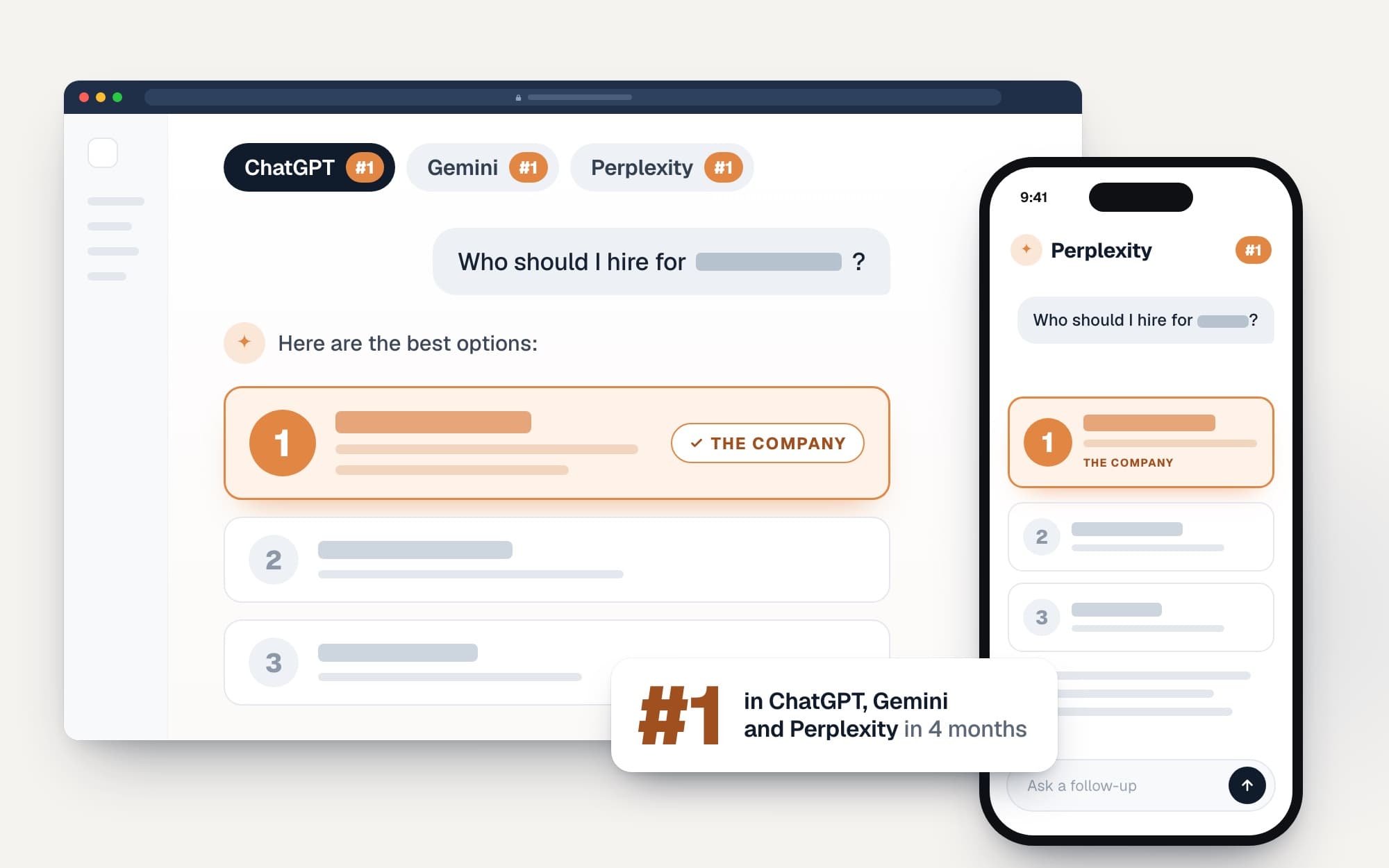
Technology company
From no website to #1 in ChatGPT, Gemini and Perplexity
In four months, from a brand-new domain and no marketing team.
//How we work
We diagnose before we prescribe.
- 01
Talk to our founders
Tell Jessica or Ben what is happening in the business, what you have tried and where the numbers feel wrong.
- 02
We find the leak
We look at the marketing and the operational handoff around it: demand, booking, reviews, repeat business, capacity and what can actually be measured.
- 03
You get the plan
A short plan in priority order: what we would fix first, what can wait and where we would not spend yet.
Starts with a short founder conversation.
//Common questions
Things we get asked first.
Have you actually run a food business?
Yes. One of our founders' own businesses was a food business in Costa Mesa, taken from farmers' markets to a storefront. The numbers and the full story are in the case study higher up this page.
What decides which restaurants show up in Google's local results?
Google publishes three factors: relevance, distance and prominence. Relevance is how well a listing matches what somebody searched for. Distance is how far the business is from the searcher, which nobody can change. Prominence is how well known a business is, which Google says draws on information across the web. Google does not publish a weighting between the three.
Do reviews affect where a restaurant appears in local results?
Google says review count and rating can contribute to local prominence, which is one of the three factors behind local results. What Google does not publish is how much weight reviews carry, or any separate credit for how recent they are. Anyone quoting a specific formula is guessing.
Does ranking in AI search need special markup?
No. Google's guidance on its AI features says the same fundamentals that apply to Search apply there, and that no special markup, file or schema is required to be eligible. The work is the same work: pages that answer the question, clear information, and sources that cite you.
//Want a second set of eyes?
You know the business better than we do.
Tell us what is happening in the business. A founder will look at the marketing, the operational handoff and the numbers before we tell you what deserves attention first.