How to build an ad campaign that actually works.
Most ad campaigns do not fail because the headline was boring. They fail because one link in the chain was broken and nobody noticed. This is the whole chain, in order.
You ran the ads. The dashboard lit up with clicks, the budget drained on schedule, and almost nobody became a customer. Or worse, the ad barely got served at all and you are left wondering if the whole thing is a scam. That sinking feeling usually means one piece of your campaign was quietly undoing the rest.
A campaign is a chain, not a clever headline
A common myth in advertising is that a great ad is mostly a great headline. Owners pour energy into the words in the box and treat everything around them as plumbing. Then they are baffled when a witty ad produces a beautiful click-through rate and zero sales.
A working ad campaign is a chain. Each link has to hold, and they have to hold in sequence: a clear objective, the right audience, a compelling offer, a message and creative that fit the platform, a landing page that matches the ad, and conversion tracking that tells you what actually happened. Money flows in at one end. Customers come out the other. If any single link is weak, the spend leaks out through the gap and you never see it.
The frustrating part is that a broken chain looks exactly like a broken ad from the dashboard. Low conversions can mean a bad offer, the wrong audience, or a landing page that loads in nine seconds on a phone. You cannot fix what you cannot locate. So before you rewrite the headline for the fourth time, walk the chain link by link.
Start with one objective, not five
The first link is the one people most often skip. What is this campaign actually supposed to do? Not "grow the business." A specific, single action you can count: a booked call, a purchase, a demo request, a form fill, a phone call from a real human with a real need.
This matters more than it sounds, because the ad platforms optimize toward whatever objective you select, and they are ruthlessly literal about it. Tell the system you want reach and it will find you the cheapest eyeballs on earth, most of which will never buy. Tell it you want conversions and feed it real conversion data, and it will hunt for people who behave like your existing buyers. Same budget, completely different outcome, decided by a dropdown you clicked in the first thirty seconds.
- Pick one primary action. A campaign can have a single north star. If you want both newsletter signups and product sales, that is two campaigns, not one confused one.
- Make it countable. "Awareness" is not a number. "Forty qualified leads a month at or under a set cost per lead" is.
- Match the objective to the buying stage. Cold audiences rarely buy on the first touch. Asking strangers to purchase a high-ticket item from one ad is a common and expensive mistake.
The audience is the budget
You spend money showing ads to people, and which people you choose decides almost everything downstream. The most persuasive ad in the world is worthless in front of someone who will never need what you sell. The most ordinary ad can print money in front of someone who was about to buy anyway.
On search platforms, the audience selects itself through what people type. Someone searching "emergency furnace repair" has told you exactly what they want and roughly when. On social platforms, you build the audience yourself out of interests, behaviors, job titles, and, most powerfully, your own customer data. WordStream's guide to Facebook ad targeting walks through how to retarget people who have already engaged and build lookalike audiences from your existing buyers, which are very different temperatures from reaching cold strangers, and each one wants its own message.
The classic waste is an audience that is too broad. A roofer who targets an entire metro area pays to reach renters, apartment dwellers, and people who replaced their roof last spring. Tighten the audience and the same budget reaches fewer people, but far more of the right ones, and your cost per customer falls even though your cost per click might rise.
The offer does more work than the copy
This is the link people least want to look at, because fixing it means changing the business, not just the ad. The offer is the actual thing you are asking someone to say yes to, and it carries more weight than any sentence in the creative.
"Contact us for a quote" is not an offer. It is a chore you are assigning to a stranger. "Free 20-minute roof inspection with same-week scheduling" is an offer, because it lowers the risk, names the time cost, and removes the friction. When clicks are high and conversions are flat, the offer is the first suspect, not the copy. People understood you. They just did not think the trade was worth it.
- Lower the risk. Guarantees, free trials, no-card-required signups, and clear pricing all reduce the fear of saying yes.
- Reduce the effort. A two-field form beats a twelve-field form. An instant quote beats "we will call you back sometime."
- Give a reason to act now. A real deadline or limited slot works. A fake countdown timer that resets when you reload the page does not, and savvy buyers notice.
Message and creative have to fit the platform
Now, and only now, do we get to the part everyone wanted to start with. The message and the creative. But "good creative" is not universal. What works depends heavily on where the ad appears and what the person was doing when they saw it.
On search, intent is already high, so the job of the ad is to confirm you have what they typed and to give them a reason to click you over the other nine results. Tight, specific, relevant. On social, nobody woke up wanting to see your ad. They came to see their nephew's birthday photos, and you are the interruption. So the creative has to earn attention in the first second, look native to the feed rather than like a banner from 2009, and respect that most of it will be watched silently on a phone held in one hand.
One discipline beats clever: the message you advertise has to match the message a person finds when they arrive. If the ad promises "50% off winter coats" and the click lands on a generic homepage, the brain registers a tiny betrayal and the back button wins. That promise-to-payoff match, sometimes called message match, is one of the cheapest fixes in advertising and one of the most neglected.
An ad only earns the visit. When the page says something different from the ad, the money you spent on that visit is gone.
The landing page is where money is won or lost
You can do everything upstream perfectly and still light the budget on fire here. The landing page is the most expensive link to ignore, because every dollar you spent getting the click is already gone by the time the page loads. A great ad pointed at a weak page is just an efficient way to waste money.
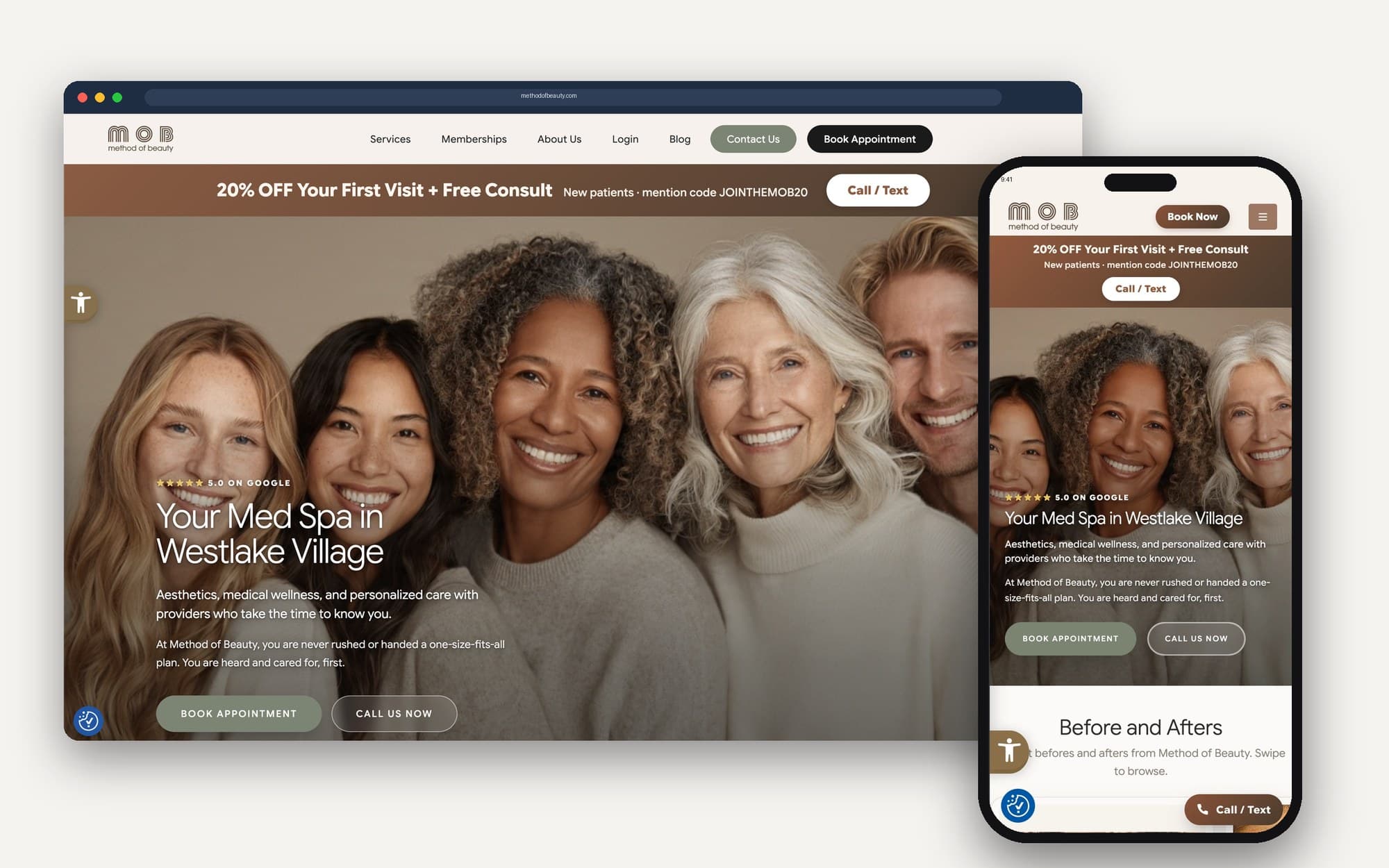
The page has one job: continue the exact conversation the ad started and make the next step obvious. That means the headline echoes the ad, the proof is visible without scrolling for a mile, the form asks for the least it possibly can, and the whole thing loads fast on a phone, because most of your traffic is on a phone. Conversion rates swing wildly by industry and by how well the page is built, which is exactly why generic "good" numbers are close to useless. WordStream's overview of landing page conversion rates makes the same point: there is no universal benchmark, only your own page measured against itself over time.
The practical move is to send paid traffic to a purpose-built page, not your homepage. Your homepage is a menu for people who already know you. A landing page is a single, focused path for a stranger who just clicked one specific promise. The difference in conversion is often not small.
While you are here
Want a straight answer about your own site?
Tell a founder what you are working on. You will get an honest read on what is worth doing first and what to skip, whether or not you hire us.
Not ready? Keep reading
Budget, testing, and the tracking that proves it
The last links are the unglamorous ones that separate a real channel from an expensive guess. Start your budget small and deliberately. The first few weeks are for learning what a customer costs you here before you scale a mistake. Cap your daily spend so a runaway bid cannot torch the month in three days, and resist the urge to judge anything before the platform has enough data to optimize.
Google's own help on how to choose your bid and budget lays out the basic levers without trying to upsell you, and the short version: set a budget you can lose for a few weeks, then let results, not nerves, decide what happens next. Test one variable at a time, not ten. Change the headline, or the audience, or the offer, and watch what moves. If you change everything at once, you learn nothing, you just get a different number.
None of this means anything without measurement, and this is where accounts often fall apart. If you cannot tell which ad produced which sale, you are not running a campaign, you are making donations with a logo on them. Set up conversion tracking before you spend a dollar, and make sure it counts the events that actually matter, the booked call and the completed purchase, not the page view. To keep your expectations sane while you read the data, a resource like WordStream's industry benchmarks for click-through and conversion rates shows just how much normal varies by category, so you stop comparing your plumbing business to somebody else's software metrics.
A reality check before you spend
A well-built campaign does not guarantee anything. It removes the obvious leaks so the offer and the market can do their work, and sometimes the honest answer is that the math does not close yet, that the offer needs sharpening or the audience needs rethinking before another dollar goes in. That is the campaign doing its job: telling you quickly and cheaply.
Walk the chain in order the next time results disappoint. Objective, audience, offer, message, page, tracking. Find the weak link, fix that one thing, and measure again.
If you would rather not learn all of this on your own dime, that is roughly the job we do at Mining Wells. Our paid advertising work is mostly this: getting the links to line up so the spend has somewhere productive to go, and the messaging and landing pages to match the promise. No tricks, no guarantees, just the boring discipline that makes the difference between a campaign that works and one that only looks busy.