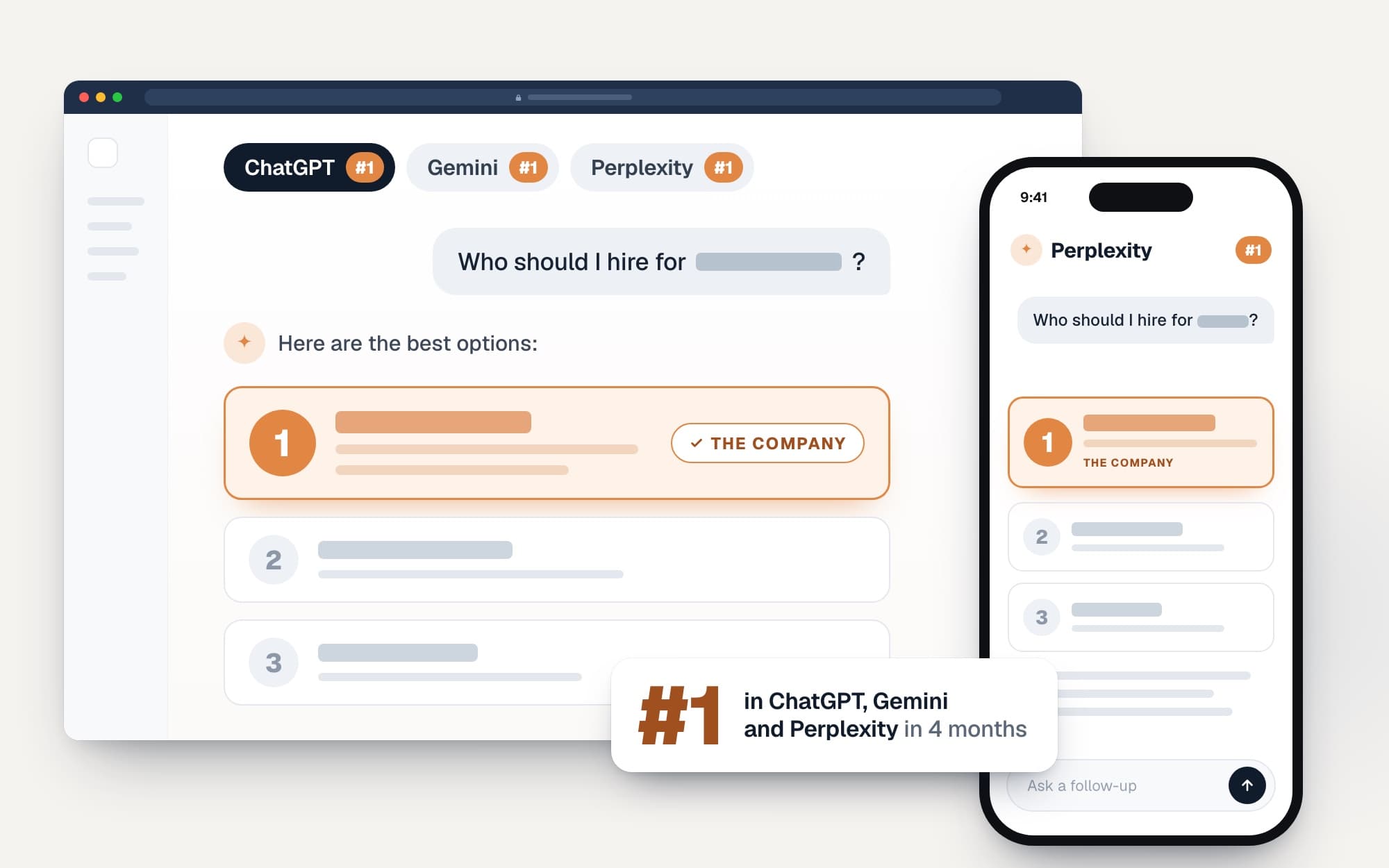
Geofencing advertising: the most underused channel in local marketing.
Geofencing draws a virtual fence around a place and serves ads to the phones inside it. Most of your competitors have never run it. Here is why that is your opening, and the one thing that decides whether it actually produces leads.
Almost every business fights over the same crowded search auctions, bidding up the same keywords against the same competitors. Meanwhile, one of the few channels that can put your ad in front of your exact buyer, in your exact territory, sits nearly untouched. Geofencing advertising is one of the most underused channels in local marketing, and done right, it can become a significant source of leads. The catch, and it is a big one, is that the targeting is the easy half.
What geofencing advertising actually is
Geofencing draws a virtual boundary around a real-world location and uses the location signals from people's phones to serve ads to devices inside, or recently inside, that boundary. The ads themselves show up the normal way, in apps and on websites the person visits, but the targeting is driven by where the device has physically been. At its simplest it is location-based ad targeting, pointed at a place rather than an interest or a search.
This is mature, well-supported technology, not a fringe trick. Google's own documentation on location targeting describes targeting ads to regions, cities, or a radius around a point as a standard capability, and HubSpot's guide to geofencing marketing walks through how brands of every size use it to reach people at the moment place and intent overlap.
Why the channel is underused, and why that is your opening
Most businesses never get past search and social because that is what every agency sells. Which means the businesses that do run location-based campaigns are often the only advertiser of their kind reaching that audience, while their competitors keep paying a premium to fight over the same clicks. Underused channels are where attention is cheapest, and this one comes with something rare: a targeting signal, physical presence, that is genuinely tied to buying intent. A few situations where it shines:
- Driving foot traffic to a local business. Serving ads to people in your immediate area, where being nearby is exactly what makes them a likely customer.
- Event-based reach. A conference, trade show, or festival gathers your exact audience in one place for a few days, and timing ads to that window can be remarkably efficient.
- Promoting a new location. Building awareness in the neighborhood around a grand opening, where proximity is the whole point.
- Service-area relevance. Making sure your ad budget reaches the region you actually serve instead of leaking to people you can never help.
Knowing where your buyer is, is not knowing what to say
Here is the part that separates the campaigns that print leads from the ones that quietly burn budget. You may know, with real confidence, that your ideal customer is inside the radius you drew. The radius does not tell you what to say to them. An impression earned by location lands cold unless the message meets that person in the right moment, with an offer that makes stopping worth their while. The fence answers where your buyer is. It says nothing about why they should pick you.
That is why two businesses can run the same fence around the same area and get wildly different results. The targeting was identical. The message was not. Creative, offer, timing, and the strategy connecting them decide everything, and that work does not come bundled with the ad platform.
Anyone can draw a fence on a map. The campaigns that produce leads are won inside the fence, on the message.
Easy to start. Hard to start well.
Opening an ad account and adding a credit card takes an afternoon. That is the easy ten percent, and it is exactly why so many first attempts at geofencing fail: the account was live before anyone decided who the ad was for, what it should say, what the offer was, or how a lead would be counted. The strategic setup, the ad itself, the content, the messaging, and the strategy behind all of it, is the ninety percent that decides whether the channel pays. That is the part we do at Mining Wells, and it is the difference between an underused channel and an underperforming one.
Done right includes the privacy lines
Geofencing runs on location data, so doing it right means respecting the rules. The Federal Trade Commission's guidance on privacy and data security is clear that location information carries real obligations, and sensitive places deserve extra caution. None of this is a reason to avoid the channel. It is the professional standard for running it, and the advertisers who follow it get the upside without the backlash.
While you are here
Want a straight answer about your own site?
Tell a founder what you are working on. You will get an honest read on what is worth doing first and what to skip, whether or not you hire us.
Not ready? Keep reading
The bullish bottom line
Geofencing advertising is real, it is mature, and it is sitting underused while your competitors crowd the same search auctions. When place genuinely maps to intent, it can become a significant source of leads, and the businesses running it well right now are mostly running it alone. The channel is not the hard part. The message inside it is.
Building that message, the ideal customer behind it, the offer, the creative, and the measurement that proves it worked, is a fair amount of what we do at Mining Wells under paid advertising. The principle is yours to keep either way: do not judge the fence until you have judged what you said inside it.