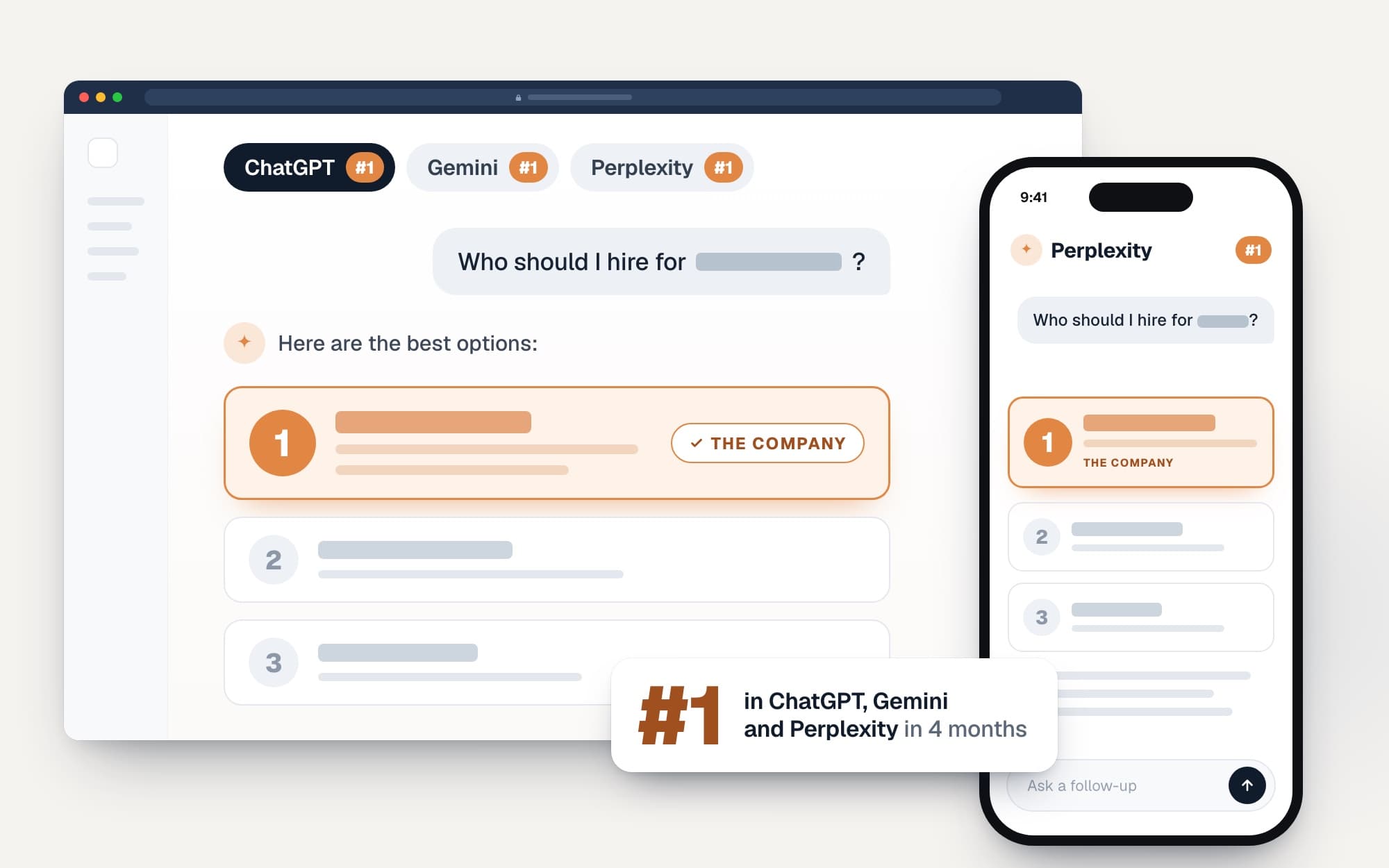
Digital PR: how modern PR builds links and trust.
You want authority and the kind of backlinks that move rankings, but you assume real PR is reserved for companies with a six-figure agency on retainer. It is not. Here is what digital PR actually is.
Somewhere along the way, "PR" came to mean a thing you cannot afford. A glass-walled agency, a monthly retainer that rivals a junior salary, and a quarterly report full of impressions nobody can spend. So you skip it, you grind out blog posts, and you wonder why your domain still feels invisible to Google. The good news is that the part of PR that helps your business most is also the part you can start doing this week.
What digital PR actually is
Digital public relations is the practice of earning coverage, mentions, and links from real publications by giving journalists and editors something genuinely worth writing about. That is the whole thing. You create something newsworthy (a data study, an expert take, a useful resource), you put it in front of the right writers, and when it is good enough, they cover it on their own editorial judgment. The links and mentions that follow are a byproduct of being useful, not the result of a transaction.
Ahrefs puts it cleanly in their guide to digital PR, describing it as a tactic that takes traditional public relations and applies it in a digital space, where the placements do not just sit there as SEO signals but drive traffic, social shares, and engagement. That distinction matters. A good digital PR placement is a thing a human reads and acts on, which happens to also be a thing Google notices.
- Coverage. A journalist writes about your study, your founder, or your point of view in an article their audience actually reads.
- Mentions. Your brand name shows up in a relevant piece, with or without a link, building the familiarity that turns into trust.
- Editorial links. The writer links to your page because it is the source, the data, or the deeper explanation. Nobody paid for it. That is what makes it valuable.
How it is different from the old-school press release
The classic press release was a one-way broadcast. You announced something (a hire, a funding round, a new product), wrote it in the stiff third person, blasted it over a wire service, and hoped. Most of those releases were written for the company, not for the reader, which is exactly why most of them went nowhere. A press release about how excited your CEO is to announce a strategic partnership is not a story. It is a memo wearing a tie.
Digital PR flips the orientation. Instead of starting with what you want to announce, you start with what a journalist's audience already cares about, then find where your business has something real to add. The goal is not to promote your brand directly. It is to insert your expertise into a story that already has demand. Journalists are not waiting to hear about your product features. They are looking for material their readers will find interesting, and your job is to be a generous, reliable supplier of exactly that.
And how it is different from sketchy link building
This is the part that keeps cautious business owners up at night, and rightly so. The internet is full of operators who will sell you links: paid guest posts, "niche edits," private blog networks, packages promising fifty backlinks for a few hundred dollars. These are not digital PR. They are the thing digital PR is the antidote to, and Google is very clear about how it treats them.
In its spam policies documentation, Google defines link spam as the practice of creating links to or from a site primarily for the purpose of manipulating search rankings, and it explicitly names buying or selling links for ranking purposes, excessive link exchanges, and paid articles that pass ranking credit. The crucial word is "primarily." An editorial link a writer chose to include because your page was the best source exists primarily to serve their reader. A link you bought exists primarily to game an algorithm. Google has spent years getting better at telling those two apart, and the gap in outcomes is enormous.
- Earned editorial links are legitimate. A writer made an independent decision to cite you. This is the kind of link the entire system is designed to reward.
- Paid and manipulative links are a liability. They can be ignored, discounted, or, in the worse cases, trigger a penalty that costs you far more than you saved.
- The tell is intent and disclosure. Google notes that buying and selling links is a normal part of the web economy for advertising, as long as those links are marked with the right attributes so they do not pass ranking credit. Disclosed sponsorship is fine. Disguised manipulation is not.
The tactics that actually work
Digital PR is not one move, it is a small toolkit. Most successful programs lean on a handful of repeatable plays, and you do not need all of them to start. You need one you can do well.
- Data studies and original research. Survey your customers, analyze a dataset you already sit on, or run the numbers on something nobody in your industry has bothered to quantify. Original data is the single most reliable way to earn coverage, because a journalist can build an entire article around a statistic you are the first to publish. You become the source, and sources get linked.
- Expert commentary. You and your team know things outsiders do not. Offering sharp, quotable commentary on developments in your field gives writers the credible voice every good article needs. This is the lowest-cost play on the list and often the fastest to pay off.
- Reactive newsjacking. When a story breaks that touches your expertise, you respond fast with a useful angle. Search Engine Journal's primer on reactive digital PR defines it as spotting an opportunity to gain coverage and reacting quickly enough to seize it. Speed is the whole game here. The window is hours, not weeks.
- Journalist request platforms. Reporters openly post what they need (a quote, an expert, a real example) on HARO-style services and on social channels. Answer the relevant ones thoughtfully and you can earn placements in outlets you could never cold-pitch your way into.
- Genuinely useful resources. A free tool, a definitive guide, a calculator, a regularly updated benchmark. Build the thing your industry keeps needing, and the links accumulate quietly for years without another pitch.
Digital PR is not the art of getting links. It is the art of being worth linking to, repeated until the links start showing up on their own.
Why it supports SEO and trust at the same time
Here is the part that makes digital PR uniquely efficient. A single strong placement does two jobs that most marketing tactics do separately. It earns the editorial link that strengthens your site in Google's eyes, and it puts your name in front of an audience that now associates you with a credible publication. You bought one thing and got two.
The trust half compounds in ways a spreadsheet underrates. When a prospect Googles you before a sales call and finds you quoted in an industry outlet, the conversation starts on different footing. When the same publications mention your brand repeatedly, you accumulate the kind of familiarity that quietly shortens sales cycles. Search engines are increasingly trying to model exactly this sort of real-world credibility, which is why links earned through actual journalism tend to carry more weight than links from anonymous, low-quality sites that exist only to host them.
The journalist's side of the desk
If you want this to work, it helps to understand the person you are pitching, because they are busier and more skeptical than most marketers assume. Muck Rack's State of Journalism research, drawn from surveys of well over a thousand reporters, paints a consistent picture: journalists do rely on PR professionals as a source of story ideas, but they have almost no patience for pitches that miss the mark. Send something off-topic and it gets deleted, no second look.
So the bar is not "send more pitches." The bar is "send pitches a specific writer will actually find useful, to the specific beat they cover, with the angle already done for them." That means reading their recent work before you email, leading with the story rather than your brand, and making it effortless for them to say yes. A relevant pitch to the right reporter beats a hundred generic blasts, every time.
While you are here
Want a straight answer about your own site?
Tell a founder what you are working on. You will get an honest read on what is worth doing first and what to skip, whether or not you hire us.
Not ready? Keep reading
What it really takes (the honest version)
Digital PR is affordable, but it is not free, and the currency is mostly effort and patience rather than cash. The data study that earns ten placements might take a week to design, run, and write up. The reactive commentary that lands in a national outlet might require you to drop everything for two hours on a Tuesday. The expert quotes only work if you actually have expertise and the willingness to share it on the record.
It is also a numbers game with a long tail. You will pitch ideas that go nowhere. You will write a study you were proud of and hear crickets. Then one piece will catch, get picked up by a writer with reach, and earn more authority in a week than three months of blogging. The teams that win at this treat it like planting rather than vending: you do the work, you wait, and the results show up on a schedule you do not fully control. Anyone promising you guaranteed placements or a fixed number of links is selling the very thing Google penalizes.
A reality check before you start
Digital PR is one of the few marketing investments that builds an asset rather than renting attention. The links and the credibility you earn do not vanish when you stop paying, the way paid ads do the moment the budget runs out. But it rewards a particular temperament: genuine curiosity about your own industry, the discipline to make something useful before you ask for anything, and the patience to let editorial decisions happen on their own timeline. If that sounds like you, the six-figure agency was never the price of entry. It was just the most expensive way in.
At Mining Wells, digital PR is the connective tissue between a few things we already do (SEO with GEO and AEO, content and messaging, and PR), because earned coverage feeds all of them at once. We are not going to promise you a placement in any particular outlet, because nobody honest can. What we can say is that the businesses that commit to being worth writing about tend, over time, to get written about. That part has not changed, and it is still the best deal in marketing.