The best SEO tools, honestly reviewed.
There are hundreds of SEO tools and a handful you actually need. Here is what each category does, which paid tools earn their keep, and the free options that punch well above their price.
You opened a tab to find one keyword tool and three hours later you have eleven free trials, two credit cards entered, and a vague sense that everyone else knows a secret you do not. The SEO tool market is built to feel like that. The good news is that the actual job is smaller than the marketing suggests, and most of what you need can be done with five or six tools, several of which are free.
First, the uncomfortable truth about SEO tools
No tool ranks your site. They measure, estimate, and organize. The ranking is still earned by useful pages, a site Google can crawl, and links from places that matter. A treadmill does not make you fit, and a $250-a-month subscription does not make you rank. It just tells you, in great detail, where you stand and what to fix next.
This matters because tool pricing is climbing and the pitches are getting louder. Most of these companies have shifted to per-seat, credit-metered plans, and a few now bolt the word "AI" onto features that existed for years. Before you pay for anything, get clear on the job you are hiring a tool to do. The best paid SEO tools are absolutely worth the money, but only for the jobs the free ones cannot do, and that list is shorter than the sales pages imply. The honest framing, that SEO is about helping search engines understand your content and helping users find your site, comes straight from Google's own SEO Starter Guide, which is free and still the best first read in the field.
So we will go job by job: keyword research, technical crawling, rank tracking, backlinks, content, and AI visibility, plus the free starter stack. For each, the question is never which are the best SEO tools in the abstract. It is "what is the cheapest thing that does this job well enough for where you are right now."
Keyword research: figuring out what people actually search
Keyword research answers two questions. What are people typing into Google, and how hard would it be to show up for it. Every paid suite does this, and they mostly disagree at the margins because they are all estimating from different data. Do not treat any volume number as gospel. Treat it as a directional signal.
- The all-in-one suites. Ahrefs and Semrush are the two heavyweights, and both publish their current tiers on the pages linked here. Pricing runs from an entry tier in the low hundreds per month up to several hundred for higher limits and more seats. Ahrefs is famous for its backlink data and a clean interface, and Ahrefs Keyword Explorer is the module most people are really paying for. Semrush is broader, with paid-ads research and a deeper feature sprawl, and Semrush pricing scales by projects and keywords tracked rather than by seats alone. The Ahrefs vs Semrush argument has no correct answer: for most teams, picking one and learning it well beats owning both.
- The budget challenger. Mangools (the KWFinder family) is the tool people quietly love because it does keyword research and basic rank tracking at a fraction of the price of the big two. If your whole job is "find some keywords and watch a few of them," it is often enough.
- The free baseline. Google's own Keyword Planner lives inside a Google Ads account and is free to use, but as the Google Ads community has documented, it shows you broad ranges instead of exact volumes unless you are actively spending on ads. Pair it with Google Trends to gauge whether interest is rising or fading.
Start free. Move to a paid suite only when you are doing this weekly and the ranges are no longer precise enough to make decisions. If you do upgrade, Ahrefs and Semrush both offer a meaningful step up in data quality. Just expect the entry plans to cap rows and projects in ways that nudge you toward the next tier.
Technical and crawl tools: finding what is quietly broken
A crawler behaves like a search engine bot and walks your whole site, then hands you a list of problems: broken links, missing titles, redirect chains, pages blocked from indexing, duplicate content. This is the least glamorous category and the one most likely to find money you are leaving on the table, because a page Google cannot crawl is a page that cannot rank no matter how good it is.
- The desktop classic. Screaming Frog SEO Spider is the tool most professionals reach for first. The free version crawls up to 500 URLs and is not a trial, so a small site can get a genuine technical audit for nothing. The paid license (billed annually) removes the URL limit, saves crawls, and unlocks JavaScript rendering and integrations. For sites under a few hundred pages, free may be all you ever need.
- The cloud crawlers. The site-audit modules inside Ahrefs, Semrush, and Sitebulb run on a schedule, track issues over time, and email you when something breaks. Convenient if you already pay for the suite. Less essential if you do not.
- Page speed and Core Web Vitals. Google's PageSpeed Insights is free and measures real performance and Core Web Vitals for any URL. It is the same standard Google uses, so there is no reason to pay a third party to tell you something Google will tell you directly.
Run a crawl before any redesign, after any migration, and roughly once a quarter otherwise. Most "we lost all our traffic overnight" stories trace back to a technical change that a single crawl would have caught.
Rank tracking: watching your positions without obsessing
Rank tracking tells you where you sit for the searches you care about, day over day. It is the most addictive category and the one most likely to waste your attention, because positions bounce around constantly and a single day means almost nothing. Track trends over weeks, not the morning's noise.
- Built into the suites. Every major platform includes rank tracking. The catch is that the number of keywords you can track is one of the main things that separates the cheaper plans from the expensive ones, so heavy trackers get pushed up the price ladder fast.
- Dedicated trackers. Tools like AccuRanker and Nightwatch exist specifically to do this one job accurately and at scale, often with cleaner local and mobile breakdowns. Worth it for agencies juggling many clients, overkill for a single site.
- The free reality. Google Search Console shows your actual average position and the exact queries bringing you clicks and impressions, straight from Google, for free. It is less convenient than a polished tracker, but it is the ground truth every paid tool is trying to estimate.
Be honest about whether you need daily tracking at all. For many small businesses, a monthly look at Search Console answers the only question that matters, which is whether the trend is up.
A tool that tells you exactly where you stand is worth paying for. A tool that promises to do the standing for you is worth being suspicious of.
Backlink tools: seeing who vouches for you (and your rivals)
Backlinks, the votes other sites cast for yours, remain one of the strongest signals in search, which is why this is the category people most want a great tool for. Backlink tools show you who links to you, who links to your competitors, and where the gaps are. The quality of the answer depends entirely on the size of the tool's link index, which is why this is where the big suites justify their price.
- The leaders. Ahrefs built its reputation on backlink data, and Semrush and Moz both maintain large indexes of their own. If your strategy leans on understanding competitor links or running outreach, this is the one job where the paid data is genuinely hard to replicate for free.
- The free option that surprises people. Ahrefs Webmaster Tools, recently rebranded as Ahrefs Free, is completely free for sites you own and verify. It shows your backlinks, runs a site audit across 170-plus issue types, and reveals which pages and keywords drive your organic traffic. You cannot spy on competitors with it, but for monitoring your own profile it is remarkably generous.
- Cross-check with Search Console. The free "Links" report in Google Search Console shows the external links Google itself sees pointing at your site. It is the most authoritative source for your own backlinks, full stop.
If you only ever care about your own links, the free tools cover you. The moment you need to study what is working for the competitor outranking you, that is when a paid suite starts to pay for itself.
Content tools: writing pages that actually deserve to rank
Content tools help you plan, structure, and optimize what you publish. This is the fastest-growing and most overhyped corner of the market, because it is where "AI" gets stapled onto everything. Some of it genuinely helps you organize a page around a topic. Some of it just generates filler that Google is getting better at ignoring.
- Content optimization. Tools like Clearscope, Surfer, and Frase analyze the pages already ranking for your target and suggest topics and terms to cover. Used as a research aid, they sharpen a draft. Used as a checklist to stuff in keywords, they produce robotic pages that read worse and rarely win.
- On-page helpers. If you run WordPress, the free version of Yoast SEO walks you through titles, meta descriptions, and readability as you write. The free Detailed extension gives you a quick on-page snapshot of any page in your browser. Both are genuinely free, both are useful on day one, and neither one is quietly trying to funnel you into a suite you are not ready to buy.
- The human part. No tool can supply genuine experience, a point of view, or first-hand detail. Google's quality guidance keeps rewarding exactly those things, so treat content tools as scaffolding for a real expert's draft, never as a replacement for one.
The trap here is volume. It is now trivially cheap to publish a hundred mediocre pages, and a lot of vendors will encourage you to. Resist it. Ten pages worth bookmarking beat a hundred nobody finishes.
Tracking AI search visibility: the new job on the list
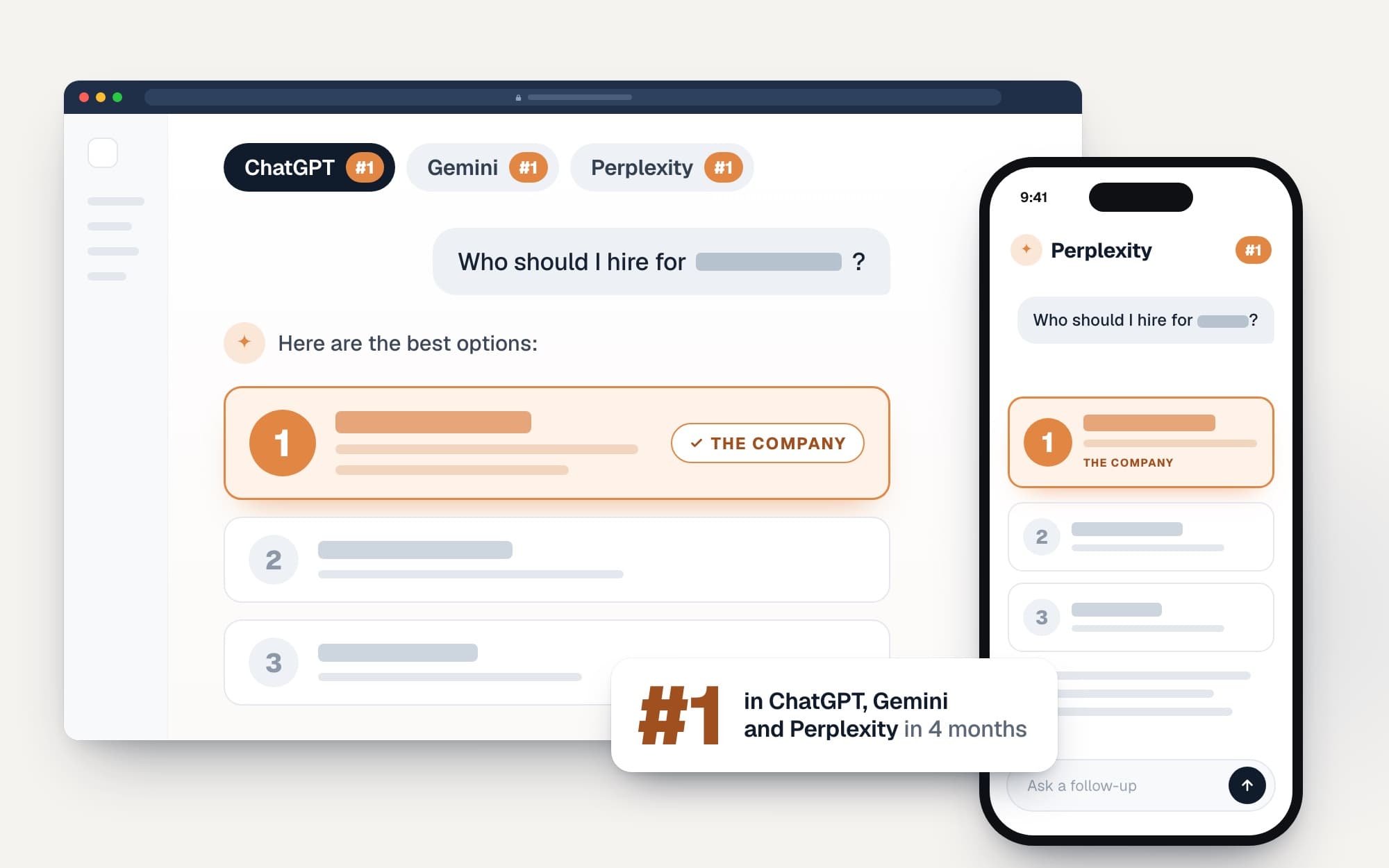
Here is what changed in the last two years. A growing share of searches never reaches a list of blue links at all. People ask ChatGPT, they read Google's AI Overviews, they let Perplexity summarize the web for them, and your traffic can rise or fall on whether those systems mention you. Measuring that is a genuinely new job, and a new class of tool has arrived to do it. The labels have not settled, usually GEO for generative engine optimization or AEO for answer engine optimization, but the question is simple. When an AI answers a question in your field, does it name you or the competitor.
- The specialists. Profound and Otterly.AI track how often the major AI engines mention your brand, which sources they pull from, and how you stack up against rivals. Otterly is the more approachable end. Profound is built for enterprises and priced like it, so be honest about whether you have enough AI-driven traffic yet to justify a bill that can dwarf a full SEO suite.
- The suites are bolting it on. Ahrefs, Semrush, and others have started adding AI-visibility features to their existing plans. If you already pay for a suite, look there first before you buy a second subscription for a category this young.
- The free version of this job. You can learn a lot by hand. Ask the AI engines the questions your customers ask, and read who they cite. Google Search Console now folds AI Overview impressions and clicks into your normal totals rather than breaking them out, so watch for queries where impressions climb while clicks stay flat, which is often the fingerprint of an answer that satisfied someone without a visit.
Our honest read: the category is real and worth watching, and it is also where the loudest overclaiming lives right now. Nobody can promise you a spot in an AI answer any more than they can promise a spot on page one. Track it, learn from it, and treat any tool that guarantees AI visibility exactly the way you would treat one that guarantees rankings.
While you are here
Want a straight answer about your own site?
Tell a founder what you are working on. You will get an honest read on what is worth doing first and what to skip, whether or not you hire us.
Not ready? Keep reading
The free starter stack (what we would actually start with)
If you are at the beginning and unsure what to pay for, here is the honest answer: start with the free stack, run it for a month, and let your own gaps tell you what to buy. This costs nothing and teaches you more than any trial.
- Google Search Console. Your real positions, queries, clicks, indexing status, and backlinks, straight from Google. Non-negotiable, and free.
- Bing Webmaster Tools. Free, and the console for Microsoft's index, which feeds Bing and Copilot. As AI answers increasingly pull from more than just Google, keeping Bing aware of your site is cheap insurance.
- Google Analytics. What people do once they land. Free, and the other half of the Search Console picture.
- Ahrefs Webmaster Tools. A free site audit and your full backlink profile for any site you verify.
- Screaming Frog (free tier). A genuine technical crawl of up to 500 URLs, enough for most small sites.
- Google Keyword Planner and Google Trends. Free, directional keyword data to point your content.
- PageSpeed Insights. Core Web Vitals and performance, measured the way Google measures them.
For ongoing learning rather than measuring, the reference libraries from Search Engine Journal's SEO section and the educational guides published by Ahrefs, Semrush, and Moz are free and far more useful than most paid courses. To go deeper on any one tool's exact current limits and pricing, the Moz Pro pricing page and the Ahrefs and Semrush pages above are the only sources worth trusting, because vendor pricing shifts and third-party blogs go stale fast.
So which paid SEO tools are actually worth it?
If you have outgrown the free stack and want the short version, here is where the best paid SEO tools earn their price, category by category, and where we would not bother. The theme underneath all of it: pay for data you cannot get for free, and stop paying the moment a tool is only handing you back what Google already gives you.
- All-in-one platform. Pick one, not both. Ahrefs if backlinks and a clean interface matter most, Semrush if you want the widest feature set and paid-ads research in the same login. For a single site on a budget, Moz Pro is the gentler, cheaper on-ramp.
- Keyword research. The big suites cover it, but if that is most of what you need, Mangools does the job for a fraction of the price. Worth paying for once the free Keyword Planner ranges are no longer precise enough to decide with.
- Technical and crawl. Screaming Frog is the one paid license we recommend almost without caveat once your site passes 500 URLs. Sitebulb is the friendlier, more visual alternative if raw spreadsheets are not your idea of a good time.
- Rank tracking. Honestly the most skippable paid category for most people, because Search Console tells you the truth for free. Buy a dedicated tracker only if you run many sites and need clean daily local and mobile breakdowns.
- Backlinks. The one job where paid data is genuinely hard to replicate. If competitor link research drives your strategy, this is where a suite subscription pays for itself first.
- Local SEO. If you live or die by the map pack, BrightLocal and Whitespark handle citation tracking and local rank grids that the big suites do clumsily. Fill out a free Google Business Profile first, though, because no tool outranks that.
- AI search visibility. The newest line item, covered above. Worth a paid tool only once you can see real mentions and traffic moving, not a day before.
Notice what is not on that list: anything that promises to write, build, or rank on autopilot. The best paid SEO tools make a skilled person faster. They do not replace one.
A reality check before you reach for your card
The best SEO tool is the one you will actually open every week, and for a lot of people that is a free one they understand, not an expensive one they feel guilty about. Buy a paid suite when you have a specific job the free stack cannot do, usually competitor research or scaled rank tracking, and when you will use it often enough to justify the line item. Skip it until then. The subscription will be there when you are ready.
And be wary of any tool, or any agency, that promises rankings, traffic, or a number it cannot control. Tools measure. People decide. The honest work, picking the right keywords, fixing what the crawl finds, and writing pages a human would thank you for, is the kind of work we do at Mining Wells, and it is the same whether you run it with a free stack or a full suite. If you would rather not assemble and run all of this yourself, that is exactly what our SEO service is for, and if you are weighing how much of the work to hand to software, our honest take on AI SEO tools is the companion to this piece. The software is just the dashboard. You are still the one driving.